
 Web Developer-APPTech
Table of Contents
The Most Influential API Architecture Patterns Powering Modern Applications in 2026
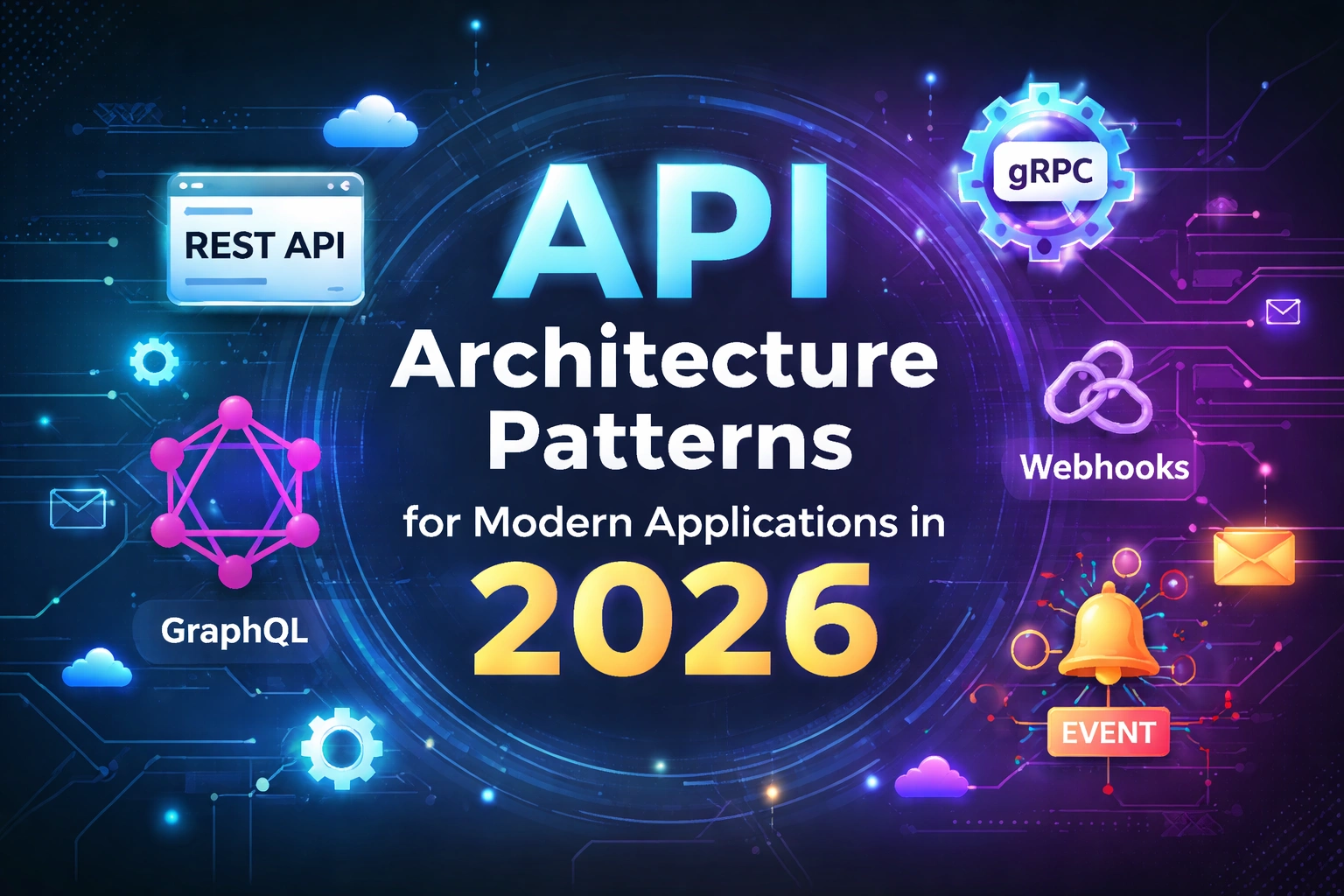
As we step into 2026, APIs remain the backbone of modern software applications. Choosing the right API architecture pattern is crucial for scalability, performance, and maintaining a seamless developer experience. In this article, we explore the most influential API architecture patterns shaping modern applications in 2026, highlighting their use cases, benefits, and real-world relevance.
1. REST (Representational State Transfer)
Despite emerging alternatives, REST continues to be a widely adopted architecture style. Its stateless nature and adherence to standard HTTP methods (GET, POST, PUT, DELETE) make it reliable and scalable.
Why It's Still Relevant in 2026:
- Mature ecosystem and tooling
- Supports caching and stateless operations
- Broad developer familiarity
Use Cases:
- CRUD-based web applications
- Public APIs for social platforms, e-commerce, and SaaS services
2. GraphQL
GraphQL allows clients to request only the data they need, eliminating over-fetching and under-fetching. This makes it ideal for modern web and mobile applications with complex data requirements.
Why It's Trending in 2026:
- Increasing adoption in enterprise and mobile apps
- Strongly typed schemas improve reliability
- Consolidates multiple APIs under a single endpoint
Use Cases:
- Data-heavy dashboards
- Mobile apps requiring optimized queries
- Applications integrating multiple backend services
3. gRPC (Google Remote Procedure Call)
gRPC uses Protocol Buffers for highly efficient data serialization. It's a go-to choice for internal service-to-service communication in microservices architectures.
Why It's Critical in 2026:
- Ultra-low latency and high performance
- Supports streaming and bi-directional communication
- Ideal for microservices and cloud-native apps
Use Cases:
- Microservices architectures
- Real-time collaboration tools
- Cloud-based applications requiring high throughput
4. Event-Driven APIs
Event-driven APIs allow systems to react asynchronously to events, improving decoupling and real-time responsiveness. This approach is increasingly vital in 2026 as real-time apps grow in popularity.
Key Advantages:
- Real-time updates without polling
- Highly scalable architecture
- Supports asynchronous workflows
Use Cases:
- IoT platforms
- Real-time analytics and monitoring
- Messaging and notification services
5. Webhooks
Webhooks are lightweight, event-driven APIs that send HTTP requests when specific events occur. They remain a popular choice for integration and automation.
Why They Matter in 2026:
- Instant notifications without continuous polling
- Seamless integration with third-party platforms
- Easy to implement for multiple use cases
Use Cases:
- Payment gateways like Stripe or PayPal
- CI/CD pipelines (e.g., GitHub Webhooks)
- SaaS integration and workflow automation
6. Hypermedia APIs (HATEOAS)
HATEOAS (Hypermedia as the Engine of Application State) is an advanced REST pattern where clients navigate resources dynamically using hypermedia links.
Why They Matter in 2026:
- Reduces tight coupling between client and server
- APIs become self-descriptive and easier to evolve
- Promotes discoverability of resources
Use Cases:
- Large enterprise systems with complex workflows
- APIs with evolving resource hierarchies
- Applications requiring dynamic navigation
Choosing the Right API Architecture in 2026
Selecting the right API architecture depends on your application's requirements, performance needs, and flexibility expectations. Here's a breakdown of popular API patterns and when to use them in 2026:
- REST: Ideal for CRUD-based applications and public APIs. It offers medium performance and medium flexibility, making it a reliable choice for most standard web applications.
- GraphQL: Best suited for data-heavy applications and frontend-focused systems. It provides high performance and high flexibility, allowing clients to request exactly the data they need and reducing over-fetching.
- gRPC: Perfect for microservices and real-time applications. gRPC offers very high performance and medium flexibility, supporting bi-directional streaming and efficient inter-service communication.
- Event-Driven APIs: Excellent for IoT platforms and real-time workflows. They deliver high performance and high flexibility, enabling applications to react asynchronously to events and scale effectively.
- Webhooks: Great for notifications and SaaS integrations. Webhooks provide medium performance and medium flexibility, offering lightweight, event-driven communication with external services.
- HATEOAS (Hypermedia APIs):Best for enterprise applications that require discoverable and self-descriptive APIs. It provides medium performance and high flexibility, reducing client-server coupling and supporting dynamic navigation.
Key API Trends in 2026
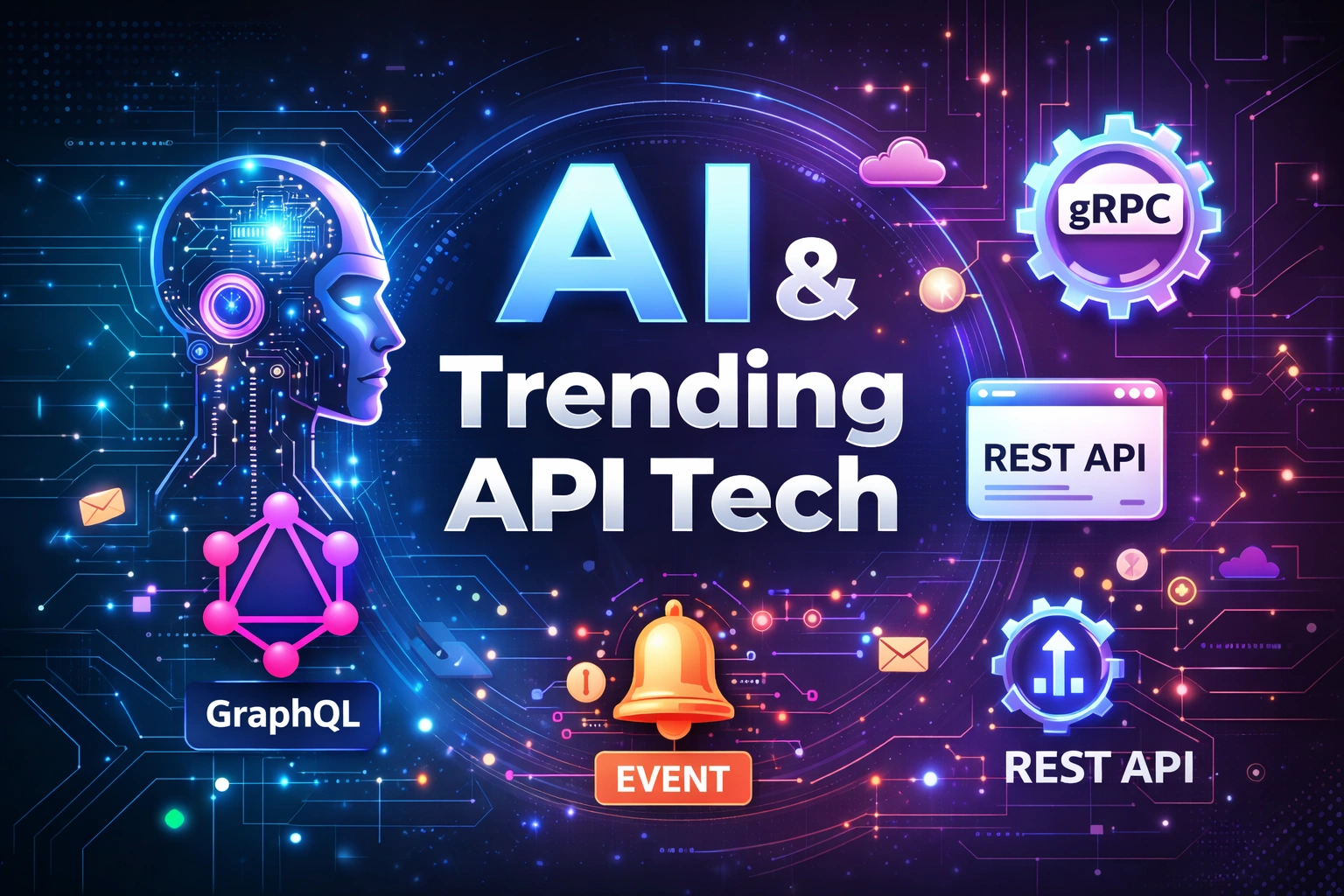
APIs continue to evolve rapidly, shaping how modern applications are built, integrated, and scaled. Here are the most important API trends to watch in 2026:
- GraphQL and Flexible APIs Are Dominating
- gRPC and High-Performance APIs for Microservices
- Event-Driven APIs and Real-Time Integration
- API Security and Governance Take Center Stage
- Event-Driven APIs and Real-Time Integration
- Hybrid Architectures and Multi-Pattern APIs
- AI-Powered APIs and Automation
- Hypermedia APIs and Self-Descriptive Interfaces
Developers are increasingly adopting GraphQL and other flexible API paradigms that allow clients to request exactly the data they need. This reduces over-fetching, simplifies frontend development, and improves user experience.
As microservices and cloud-native architectures expand, gRPC is becoming essential for high-performance, low-latency communication between services. Its support for streaming and Protocol Buffers makes it ideal for real-time applications.
Applications in IoT, fintech, and collaborative platforms rely on event-driven APIs for asynchronous communication. Real-time updates, triggers, and notifications are critical for scalable, responsive applications.
With rising cyber threats, API security is a top priority. OAuth 2.0, JWT tokens, rate limiting, and API gateways are becoming standard practices. Proper governance ensures APIs remain compliant, secure, and maintainable.
Applications in IoT, fintech, and collaborative platforms rely on event-driven APIs for asynchronous communication. Real-time updates, triggers, and notifications are critical for scalable, responsive applications.
Modern applications no longer rely on a single API pattern. Developers are combining REST, GraphQL, gRPC, and event-driven approaches in hybrid architectures to balance flexibility, performance, and real-time capabilities.
AI integration is transforming APIs. Machine learning and generative AI APIs enable automated decision-making, predictive analytics, and smarter services. Expect AI-powered endpoints to become common in business applications.
HATEOAS and hypermedia-driven APIs are gaining traction in enterprise systems, enabling clients to navigate APIs dynamically and reducing tight coupling between frontend and backend services.
How AppTech Mobile Helps You Succeed
At AppTech Mobile, our mission is to turn innovative ideas into high-performance, scalable applications that drive business growth. Here's how we ensure your success:
- Strategic Consultation and Planning
- Custom, High-Performance Solutions
- Seamless Integration
- Security and Compliance Assurance
- Continuous Support and Optimization
- Innovation and Future-Proofing
We start by understanding your business goals, target audience, and technical requirements. This ensures that every API, application, or integration we build aligns perfectly with your strategic objectives.
Our team delivers tailored API architectures, mobile apps, and web solutions optimized for speed, scalability, and reliability. Whether you need REST, GraphQL, gRPC, or event-driven systems, we implement the architecture that best fits your business.
We help your systems work together efficiently by integrating APIs, third-party platforms, and cloud services. This reduces operational friction and enhances overall workflow efficiency.
We prioritize data security and regulatory compliance, implementing industry-standard protocols and best practices to protect your users and business assets.
Success doesn't stop at deployment. We provide ongoing monitoring, maintenance, and updates, ensuring your applications remain robust, secure, and future-ready as your business scales.
By incorporating emerging technologies like AI, machine learning, and cloud-native solutions, we ensure your applications remain competitive, efficient, and prepared for future challenges.
Partner with AppTech Mobile Solutions to Design & Develop High-Performance Custom Mobile and Web Applications.